
Reading time: 4 minutes
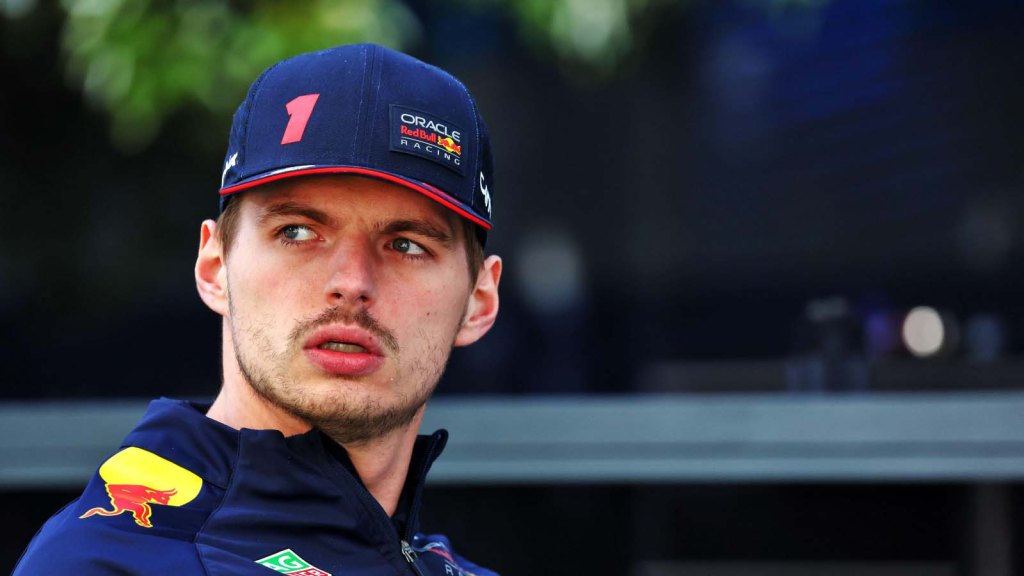
“[Formula 1] seems to have become a Formula E on steroids.” With this sarcastic phrase, Max Verstappen opened his interview at the end of the first day of testing in Bahrain. A description, at times amusing, that proved to be quite prophetic: Domenicali is trying in every way to steer F1 in a defined path, but was it the right choice?
ARTIFICIAL OVERTAKES
In the first races of the season, the number of overtakes per Grand Prix has risen exponentially. Take, for example, the Australian GP, a sort of ‘hybrid’ street circuit. From 45 total overtakes in the 2025 edition (held in chaotic rainy conditions), it increased to almost triple, 120 overtakes, in normal track conditions. All of this is due to a very specific point in the regulations, the one regarding the battery: each driver can draw on the additional horsepower of the electric motor at any time, but when the battery needs to recharge, the driver immediately loses the extra speed they had gained. We have seen drivers lose almost 60 km/h on the straight because of this, and therefore, this explains the reason for so many overtakes.
This way of racing makes the races more unpredictable, more spectacular, but considering these as true overtakes is different from what F1 had taught us. Executing an overtake means taking a risk, it means inventing a different line. In short, before 2026 overtakes were made through the skill of the driver, through the ability to create an opportunity. Now, it’s all more random, because overtakes often occur in the middle of a straight, at the moment when one of the two drivers loses the boost provided by the hybrid component.
THE ERA OF THE STREET CIRCUIT
Another trend in today’s F1 is racing on city circuits, a feature that can also be traced back to electric Formula racing, in which they race exclusively on street circuits. We went from the early 2010s, when the city circuits were Monaco, Melbourne, Montreal, and Singapore (which were supposed to be special stages of the World Championship), to reaching in 2026 as many as 9 GPs out of a total of 24. The idea of introducing tracks in cities comes from the desire to make F1 increasingly attractive to the public, racing in exclusive locations, in the most famous cities in the world.
And, perhaps, here is the explanation for the connection between the addition of new city circuits and the new regulation: the activation of the engine boost thus becomes a key card to play on narrow tracks, where overtaking is limited. In any FE race, most overtakes happen on the straights, when the car activates the boost, which a driver in this series can activate once per lap. It should not be surprising if, in the coming years, more city circuits are added, since F1 seems to have solved the problem of few overtakes even on narrow and twisty tracks, such as the GP of Madrid, the new addition to the calendar. But, even here, is it following what fans like? By favoring the growth in the number of city circuits, historic Grand Prix are removed, such as the Nurburgring, Spa-Francorchamps, Montmeló, and Imola, tracks where F1 has built its history.
MORE CHESS THAN RACES
F1 must be considered as the university of the entire motorsport world, a way to effectively determine who the best drivers are. The new regulations, although on one hand have increased the spectacle, on the other make the races less romantic, allowing drivers to take fewer risks, following strategies set in the garage hours before the race.
Now, F1 seems much more like chess, because the driver has to think much more compared to just a year ago. It is no longer necessary to go fast, it is no longer necessary to take risks, but it is essential to plan your lap to push to the fullest on the straights, while the driver tries to understand when the rival cars will be lower on energy. A tactical battle rather than a wheel-to-wheel clash on the track.



Lascia un commento