

Tottenham, coached by Zerbi, was practically saved on the last day, but this is the only positive news for the team led by chairman Levy. As a top European club, the Spurs have entered a decline, caused by the management of the club and wrong investments. Let’s analyze from a managerial and economic point of view what brought Tottenham to the brink of relegation.
A DISASTER ANNOUNCED
The London team has always been considered incapable of winning trophies. In reality, after years of pure football suffering, Tottenham seemed to have taken the right path under the guidance of Mauricio Pochettino. Between 2017 and 2019, the team was one of the most sparkling in the entire European scene: the team is solid, united, and has a strong sense of belonging, values that are difficult to recognize in modern football. Tottenham plays electric football, based on great pressing, intensity, and physicality. Harry Kane becomes the captain and the symbol of the team, Son Heung-min becomes the fans’ idol, and Dele Alli is that prospect who makes everyone in London dream.
While Spurs come within a step of winning the Champions League in 2019, the foundations are laid for the club’s future failure. First, the management begins to clash with the team’s mastermind, Pochettino himself: despite the incredible 18/19 season, the Argentine coach is dismissed during the following season. The inability to manage the team becomes Tottenham’s weak point: stagnation is the right term to identify the club’s transfer market. On one hand, no signings are made, on the other, it becomes difficult to manage human relationships, with Dele Alli being the most striking case.
ONE STEP AWAY FROM PLAYING IN THE CHAMPIONSHIP WITH THE 1 BILLION STADIUM
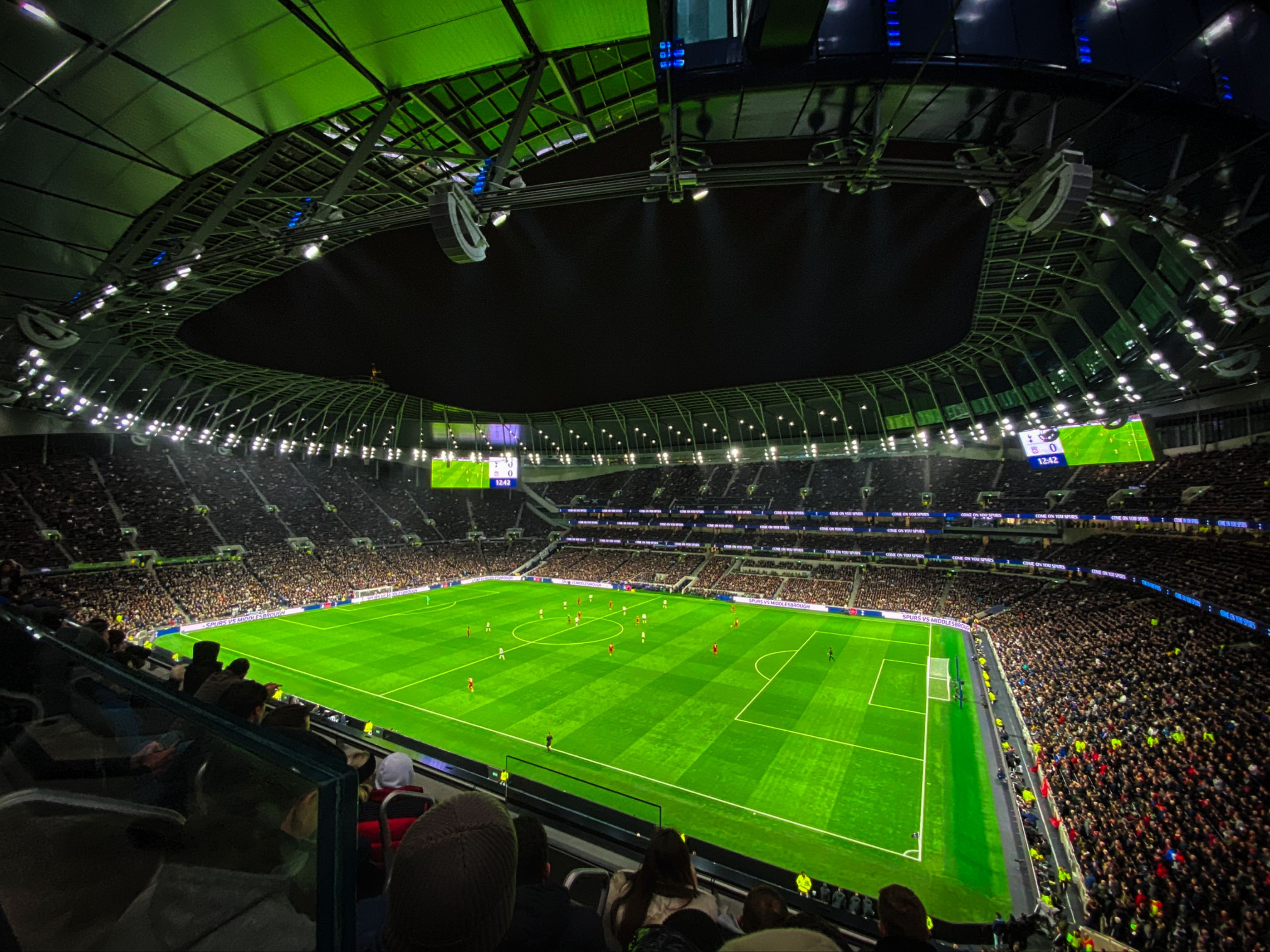
Under the magnifying glass, for the umpteenth time in this increasingly commercial football, ends up the presidency that followed an American business model. President Levy focused more on marketing and business rather than on building the team’s identity, and at the center of the criticism is the management of the construction of the new stadium. A project that started in 2015 with an initial expenditure of 300 million pounds, which concluded in 2019 with Levy declaring to be in debt by more than 600 million pounds, with the project amounting to the crazy sum of 1 billion and 200 thousand pounds.
Levy certainly completed a colossal undertaking, with the Spurs’ stadium even housing a 5-star hotel and the facilities needed to host concerts and NFL games. The problem is that from a footballing perspective, this was the moment when the Spurs began to sink. Under the pressure of all those voices that had attacked Levy’s investments, the management spent the few remaining funds on wrong purchases. First, they focused on the reverse football philosophy brought by Mourinho, then on Conte’s, and finally on Postecoglou’s revolutionary approach, but confusion reigns supreme. The sale of Kane and the departure of the veterans (Son, Vertonghen, and Eriksen) left a deep void in the team. Talented players arrived, including Kulusevski, Udogie, and Solanke, but Tottenham, despite winning the Europa League, never recovered.


Rispondi