
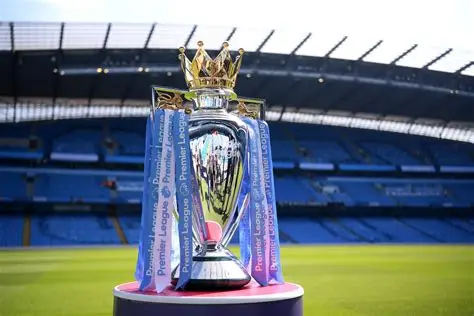
It’s obvious to say, but if there were an award for the most hard-fought league in all of world football, this title would definitely go to the Premier League. Close teams, an incredibly dynamic style of play, and the amount of money circulating around this league are the parameters we’re going to look at!
COMPETING AT THE HIGHEST LEVELS
The first statistic that confirms the unpredictability, and therefore the number of teams that compete for the Premier League title every year, can also be seen when compared with the top winners of the last 20 years in the major European leagues. In Serie A, excluding Napoli’s 2 recent titles, the championship has been a three-way affair between Milan, Inter, and Juventus. In the Bundesliga, over the past 14 years, 11 titles have been won by Bayern Munich. In 13 years of Ligue 1, 11 championships have been taken by PSG. On the other hand, despite Manchester City winning 8 titles, there has been a rotation of as many as 5 different teams, with United, Liverpool, Chelsea, Arsenal, and even Leicester’s crazy 2015/2016 title.
Besides this comparison, in the Premier League you can really feel a higher level of competitiveness compared to other leagues. Take, for example, the wide range of teams fighting anywhere from the Europa League spots to the relegation zone. In fact, from 6th to 17th place there are only 16 points in the 25/26 season, which is very few if you consider, for example, Serie A where there’s a 32-point gap between 5th-placed Milan and 4th-from-bottom Lecce. These numbers show how thin the line is between top and second-tier teams and those in the third and fourth tiers: if you take out the real title contenders and the few teams destined for relegation, the results are totally unpredictable.
PREMIER LEAGUE, IS IT A MATTER OF MONEY?
But where does that intensity come from, what’s behind the spectacle that the Premier League gives us every weekend? The answer isn’t simply in the amount of money circulating around the English top division, but particularly in how the earnings are distributed. Let’s break down the TV revenue: 67% of the income is distributed in the same way to every club, and only 19% is given to the clubs that finish the season in the Champions League, as a bonus. This system gives the league more stability, with almost all clubs investing the same resources in facilities and transfer windows.
This distribution, instead of driving investors away, actually presents an even more intriguing challenge. The Premier League is also the league with the most foreign investors, and the main reason is that this tightly-knit internal ecosystem clearly encourages those who want to invest in a club. Most of the money going into the transfer market comes from these investors. We’re not just talking about top teams like Manchester City or Liverpool, with their true multimillion-dollar campaigns, but also teams like Tottenham, which narrowly avoided relegation last season, and has already spent around 60 million euros to sign right-back Van Hecke, joining after the first part of his career at Brighton.




Lascia un commento